Over the past year, Canadian boards moved with intent. Across the TSX Composite, the TSX Boards saw faster refresh, fuller self-assessment disclosure, shifting diversity reporting, and clearer skills matrices. Boards are getting sharper about fit-for-purpose skills, more candid about performance, and more explicit about how they evolve. The result: governance that reads less like a checklist and more like a strategy.
Board renewal accelerates across Canadian issuers
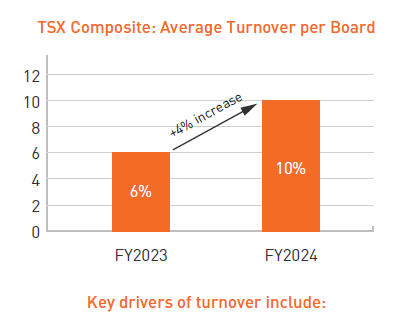
In 2025, Board turnover increased moderately, up 4% from 2024 levels. Among the TSX Composite, 10 Boards experienced turnover exceeding 30%, signalling an elevated pace of renewal across Canadian issuers.
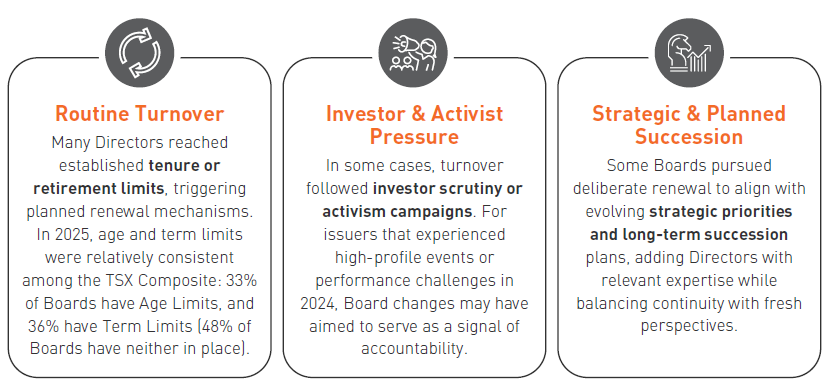
According to Spencer Stuart, the majority of newly appointed Directors in 2024 had specific experience in the company’s industry / sector compared to prior years.1 Many Boards appear to be moving from compliance-driven refreshment to skills- and strategy-driven renewal, aligning Board capabilities with long-term company direction.
Dialogue-driven assessments are redefining effectiveness
Nearly all (99%) of the TSX Composite conduct full Board assessments, and the vast majority (90%) perform them annually. Two notable trends emerged in 2025:
1. Greater transparency of the assessment process; and
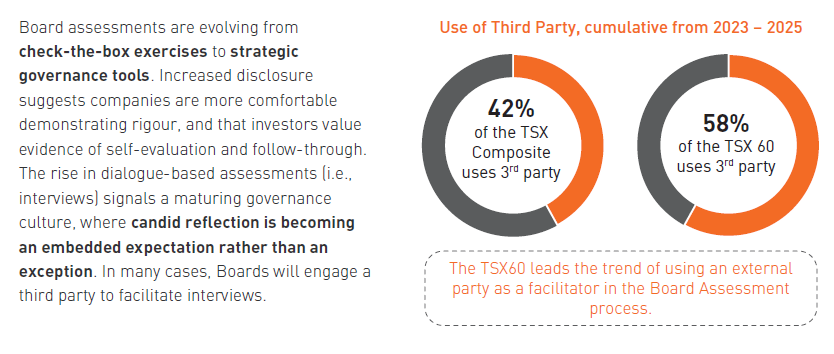
2. More dialogue-driven assessments, incorporating peer feedback and facilitated discussions
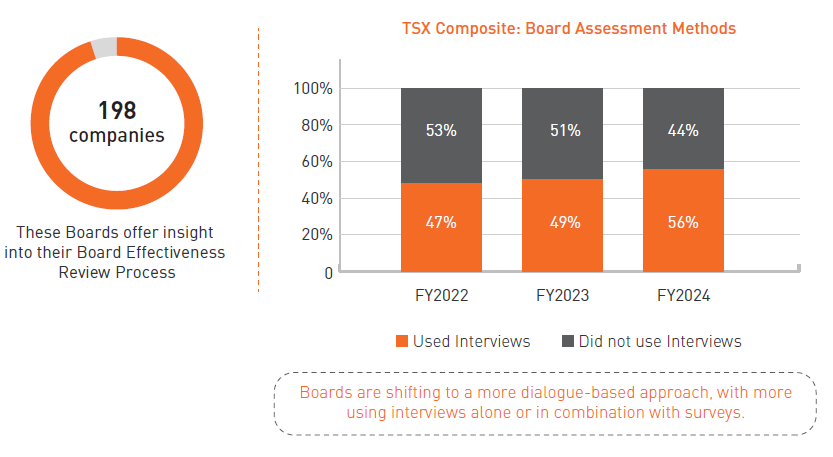
Out of the 214 Boards in the TSX Composite, 198 offered detailed insights of their Board Effectiveness review process, up from 183 in 2024, signaling a steady move toward more robust disclosure. A year-over-year breakdown of assessment methods are as follows:
Diversity disclosure reflects shifting priorities and pressures
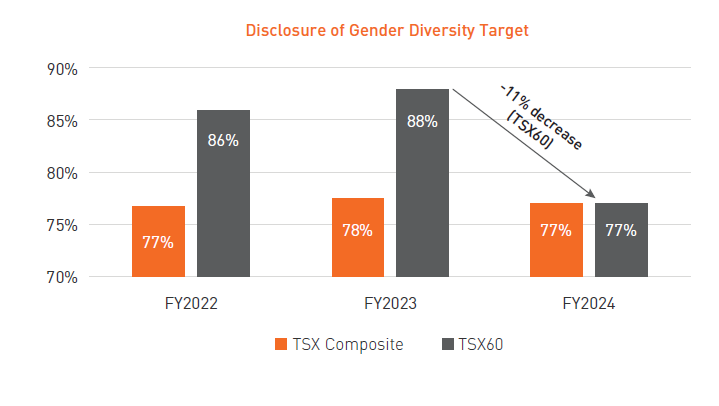
Disclosure of board diversity policies and gender diversity targets declined in 2025, reversing several years of steady growth. The decrease was more pronounced among TSX60 issuers, many of which operate cross-border and are navigating shifting dynamics in context of the U.S. regulatory and political environment. Among the S&P500 from 2024 to 2025, disclosure of Board gender and racial diversity fell by 28% and 31% respectively.2
Conversely, disclosure of racial and ethnic diversity targets increased 6% year-over-year. This change aligns with Glass Lewis’ 2024 policy, which states that companies must disclose, or commit to setting, diversity targets or risk an “Against” recommendation for the Nominating Committee Chair.
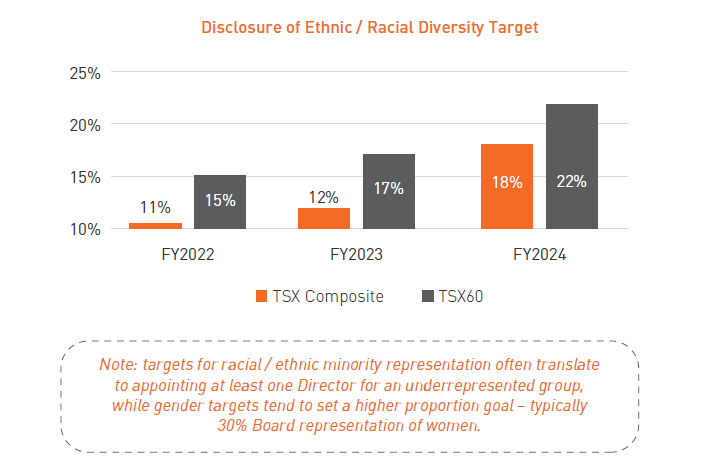
The directional shifts in diversity disclosure highlights the dynamic intersection of regulation, politics, and investor expectations. Issuers are expanding their diversity focus beyond gender to include racial, ethnic, and broader diversity dimensions, signaling a shift from single-metric diversity compliance to a more holistic view of Board composition. Looking forward, the political changes across the border and potential shifts in proxy advisor frameworks may once again influence disclosure trends in Canada.
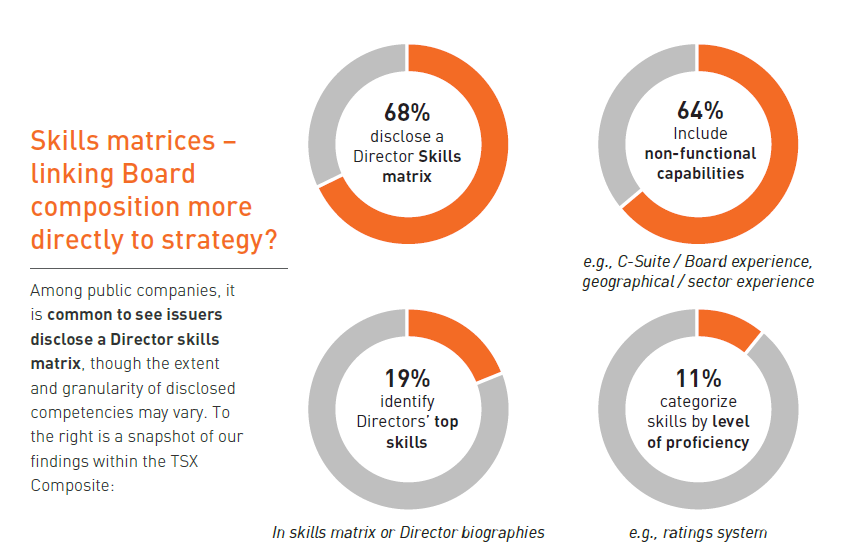
In 2024, 68% of newly appointed non-executive Directors had experience in the Company’s industry or allied sector, an increase from prior years and a reflection of growing focus on Board and strategy alignment. Detailed skills matrices reinforce the emphasis on industry experience by providing a structured view of Director’s expertise, benefiting both investors and Boards. For investors, they enhance transparency by clearly demonstrating alignment between Board expertise and company strategy. For Boards, they act as a succession planning tool, revealing skill gaps and supporting proactive recruitment. As disclosure practices mature, we anticipate a greater linkage between disclosed skills and stated strategic priorities.
Conclusion
2025 underscored that effective governance is an active process, not a static framework. Boards are increasing the rigour around self-evaluations and increasing the detail of disclosure around self-governance. The direction of travel is clear: governance practices in Canada are moving beyond “ticking the box” toward genuine performance alignment. As Boards continue to evolve, the emphasis is shifting from what is disclosed to why it matters – how composition, assessment, and diversity together strengthen oversight and long-term value creation.
Methodology
All data is based on publicly disclosed information obtained through Company Proxy Circulars.
• Data was collected from the Proxy Circulars for all the 2025 constituents of the TSX Composite;
• At the time of data collection, there were 214 companies included in the TSX Composite
• Data represents the disclosure of Board Evaluation processes, DE&I policies and Board Renewal mechanisms
• For data summary purposes, all “No” indicates that Board practices were not disclosed
• Special thank you to Samara Slavens and Lauren Rozenberg for support in the data analysis