Introduction
As 2025 unfolded, Boards faced a complex environment driven by AI’s rapid evolution, geopolitical shifts, and tariff uncertainty. In response, priorities around talent management, incentives, and Board effectiveness remained paramount. Hugessen’s 2025 Director Pulse Survey captures Boardroom sentiment and delivers timely insights for 2026.
Key Takeaways:
- Despite macroeconomic pressures, most respondents reported financial results at or above expectations this year.
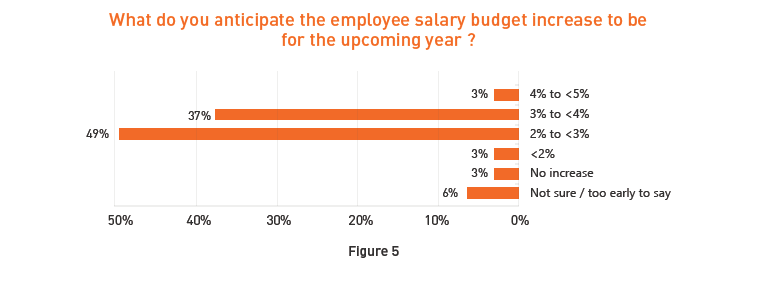
- Salary budgets are expected to increase between 2% and 4%, with half of respondents expecting salary adjustments between 2% and 3%, a more conservative increase compared to prior years.
- Talent management and retention, enterprise risk management, and organizational culture remain top-of-mind priorities for Boards heading into 2026.
- While some respondents are shifting Diversity, Equity, and Inclusion (DEI) policies, the prevalence of DEI incentive metrics in Canada has remained stable, a stark contrast to the retreat observed south of the border.
- Boardroom culture and behaviours are seen as the greatest drivers of Board effectiveness, while a lack of alignment on strategy is viewed as the most significant challenge.
2025 Performance & Incentive Decisions
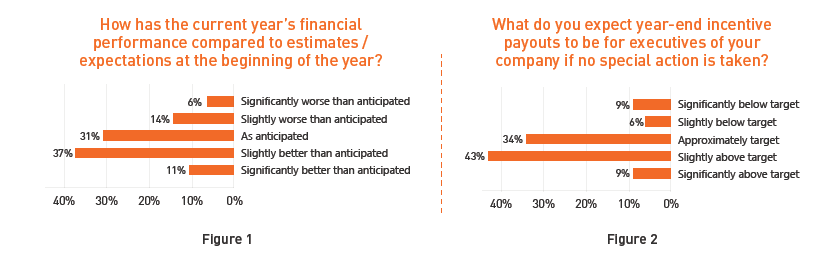
Despite macroeconomic pressures, including tariffs and shifting political policies, most organizations performed in line with expectations, as 79% of Directors expect their organization’s financial performance to meet or exceed expectations set at the beginning of the year (Figure 1), consistent with prior years. Moreover, 86% of respondents anticipate year-end annual incentive payouts to be at or above target, underscoring that 2025 proved to be a relatively stable year for many organizations (Figure 2).
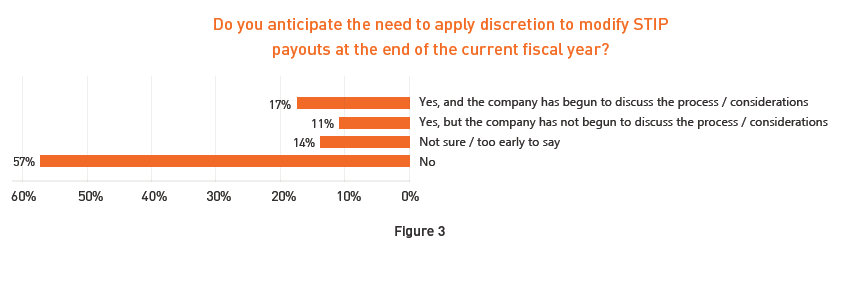
The expected use of discretion within the STIP ticked up year-over-year (28% prevalence vs. 21% last year), indicating that for some organizations, formula-driven incentive outcomes did not necessarily reflect overall company performance (Figure 3). Among those planning to apply discretion, most either anticipate applying positive discretion or feel it is too early to determine how discretion will be applied. The most common approach to applying discretion was to utilize a formal discretionary component, however some respondents applied overarching discretion.
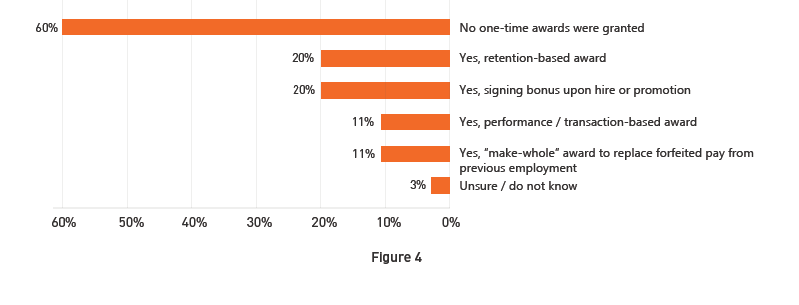
One-time awards remain an important tool for addressing gaps in the regular LTIP program, with 40% of respondents reporting their use in 2025. When used, these awards were primarily for signing bonuses for new hires or promotions and retention-based awards followed by performance or transaction-based awards (Figure 4).
Salary Budgets
Salary budgets are expected to be more modest in 2026, a noted reversal from prior years, likely reflecting a softening of labour markets and economic uncertainties. For FY2026, most respondents anticipate salary budget increases of 2% to 4% (Figure 5), primarily positioned at the lower end (2% to <3%) of the range.
Top Board Priorities for 2026
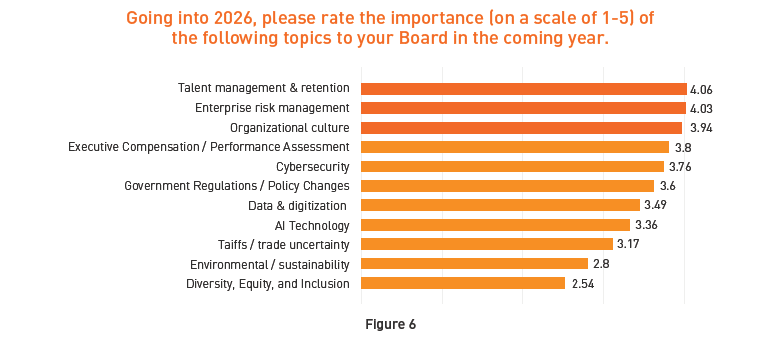
Heading into 2026, Directors identified talent management and retention, enterprise risk management, and organizational culture as the top three priorities for their Boards, with the first two maintaining their position from 2024 (Figure 6). This suggests that despite an ever-changing operating environment, talent, risk management, and culture continue to be key pillars of success and ongoing areas of focus for Boards.
Despite significant attention on tariff and trade uncertainty, respondents have ranked such items in the bottom quartile of Board priorities (Figure 6), indicating that many respondent organizations have been less impacted (e.g. energy, financial services, real estate) and/or are effectively navigating such uncertainties.
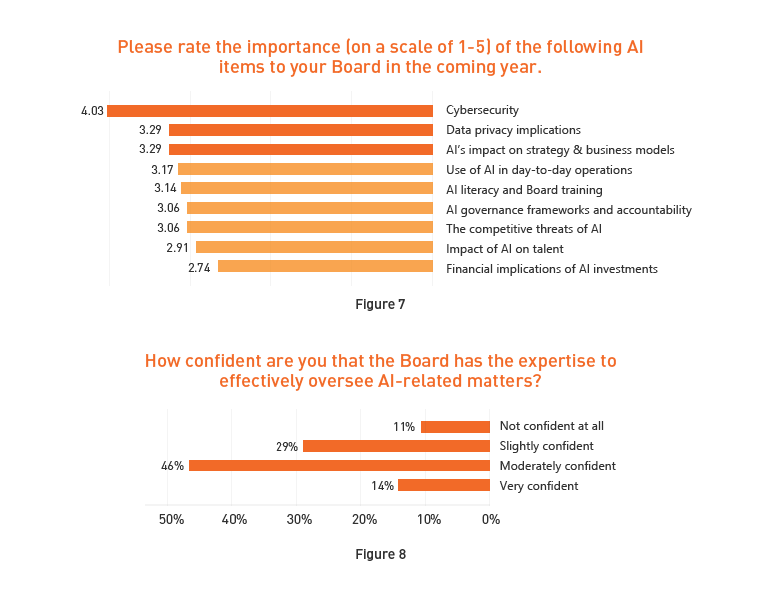
As AI becomes increasingly prevalent in everyday business operations, Boards are most focused on ensuring robust cybersecurity measures associated with AI tools (Figure 7). Interestingly, ratings varied most on the importance of AI’s impact on strategy and business models. This divergence suggests that while AI is being widely adopted as a business tool, its influence on core business fundamentals differs significantly across industries. To better navigate these challenges Directors identified the continued need to deepen AI expertise within the Boardroom, with relatively few expressing strong confidence in their Board’s ability to oversee AI-related matters (Figure 8).
Sustainability, Social and Human Capital Metrics
In 2025, DEI metrics and policies faced heightened scrutiny, particularly in the U.S. Despite these pressures, respondents report continued support for DEI measures with no observed cases of companies removing DEI metrics from incentive programs, and only one instance of a company modifying its metric (to transition towards a broader framework “emphasizing an inclusive working environment”). Furthermore, of the organizations that have executive or Director diversity policies, only 13% adjusted such policies (generally by refining targets) and none explicitly removed their DEI policies.
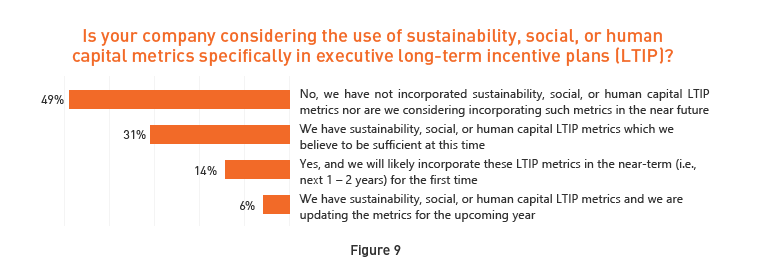
Sustainability, social, and human capital metrics continue to see support in long-term incentive plans (“LTIP”), with 31% of respondents including such metrics in the programs. Moreover, an additional 20% are expected to either introduce these metrics to their LTIP within the next two years or update existing metrics in the coming year (Figure 9). Among organizations that have adopted or are considering these metrics, climate measures are the most prevalent, followed by leadership and governance, and human capital metrics.
Board Effectiveness
Organizations continue to leverage Board effectiveness reviews as a tool for self-reflection and value creation. Hugessen’s recently published article, titled “Insights from the 2025 TSX Composite: From Compliance to Credibility” examines Board Effectiveness practices across the TSX Composite. This review found 99% of the TSX Composite conduct full Board assessments and 90% conduct those assessments annually. Furthermore, 56% of TSX Composite Companies conducted interviews alone or in combination with surveys. Based on Hugessen’s experience, combining surveys with interviews provides richer insights, particularly when discussions probe into themes flagged by survey results.
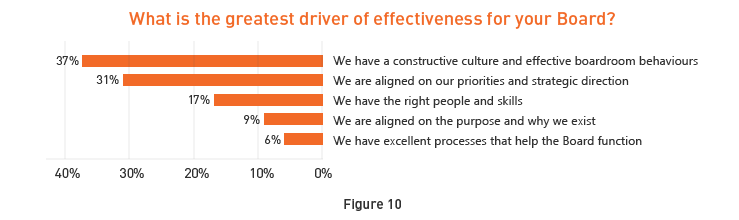
Having the right people combined with fostering a constructive culture and strategic alignment is critical to Board effectiveness. The survey results show that constructive culture and Boardroom behaviors, and alignment on priorities and strategic direction are the two greatest drivers of Board effectiveness (Figure 10). While Directors identified alignment on strategy as one of the greatest drivers of effectiveness, this can be challenging to do, with respondents flagging building such alignment as a top challenge facing their Boards.
CEO succession planning remains a critical priority for Boards, yet specific approaches vary in depth. While 83% of Directors indicated their Boards reviewed CEO succession at least once a year, only half have robust and ongoing conversations about potential candidates, their level of readiness or their development plans. The need for succession planning is underscored by the increased CEO succession rate amongst S&P 500 companies of 12.5% in 2025, up from 9.8% in 20241.
Conclusion
2025 was a year of evolving pressures and shifting priorities. Despite an increasingly dynamic external landscape, including geopolitical uncertainty, economic volatility, and the rapid rise of AI, Boards remained focused on managing risk and driving alignment, resulting in financial performance that largely met expectations. By concentrating on key priorities, fostering a constructive culture, deepening expertise, and embracing ongoing self-reflection and growth, Boards and their Directors are well-positioned to help their organizations navigate change and seize new opportunities for long-term value creation.